
Underinflated tires can lead to various issues such as overheating, uneven wear, and decreased efficiency. Knowing how to use an air compressor to inflate your tires can save you time and inconvenience.
You will need the right tools, including a tire chuck, regulator, and pressure gauge. It’s important to know the correct PSI for your tires and fill them slowly to avoid overinflation. There are some variations in filling bike tires with an air compressor, such as using an adaptor and filling them slowly to prevent explosions.
Key Takeaways:
- Using an air compressor to inflate tires can save you time and inconvenience.
- Make sure you have the right tools, including a tire chuck, regulator, and pressure gauge.
- Know the correct PSI for your tires and fill them slowly to avoid overinflation.
- Filling bike tires with an air compressor may require an adaptor and extra caution.
- Maintaining proper tire pressure is important for safety, vehicle performance, and fuel efficiency.
Required Tools for Using an Air Compressor to Fill Tires
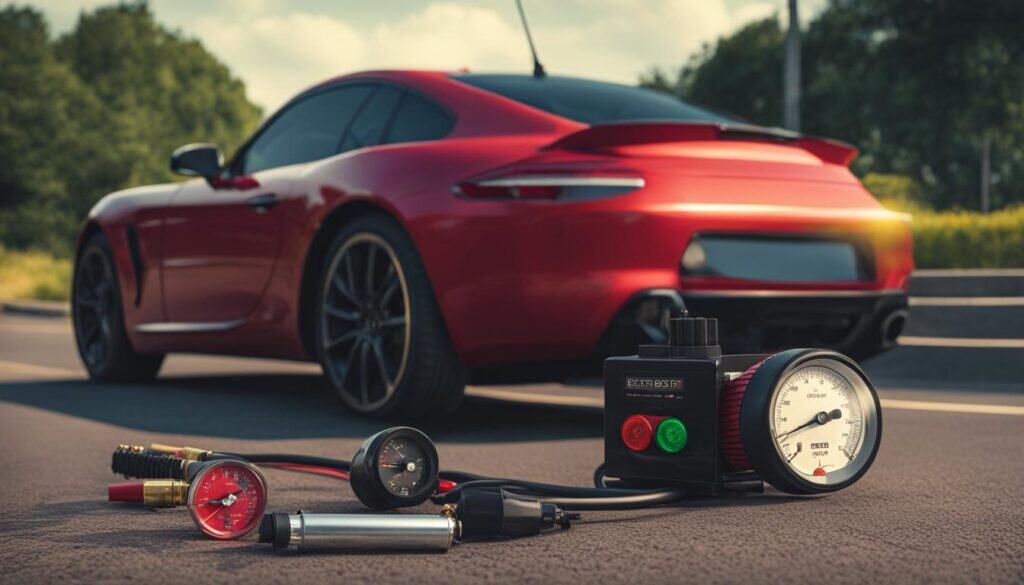
To effectively fill your tires with an air compressor, you will need specific tools. These tools include a tire chuck, which allows the air compressor to attach to the tire’s valve stem. A regulator is also necessary to control the amount of air coming from the compressor and reach the correct PSI. Additionally, a pressure gauge is essential to ensure that you fill the tires to the correct PSI and avoid underfilling or overfilling them. Having these tools on hand will ensure safe and effective tire inflation.
Tire Inflation Tools
| Tool | Description |
|---|---|
| Tire Chuck | A device that connects the air compressor to the tire’s valve stem. |
| Regulator | Controls the amount of air flowing from the compressor. |
| Pressure Gauge | Measures the tire pressure to ensure accurate inflation. |
With a tire chuck, regulator, and pressure gauge, you’ll have everything you need to fill your tires effectively. Make sure to choose tools that are compatible with your air compressor and tire valve stems. This ensures a secure connection and accurate inflation. Remember to always follow the manufacturer’s instructions and safety guidelines when using an air compressor.
- Tire chuck attaches the air compressor to the tire’s valve stem
- Regulator controls the air flow from the compressor
- Pressure gauge measures the tire pressure for accurate inflation
Steps to Fill Tires Using an Air Compressor
Learning how to fill your tires using an air compressor is a simple process that can save you time and ensure your tires are properly inflated. Follow these steps to inflate your tires effectively:
Gather the necessary tools:
Before getting started, make sure you have the required tools on hand. These include a tire chuck, regulator, pressure gauge, and any necessary adaptors for bike tires.
Determine the correct PSI:
Check your vehicle’s owner’s manual, tire markings, or vehicle stickers to find the recommended PSI for your tires. This information is crucial for properly inflating your tires.
Attach the air compressor:
Remove the valve stem cap from the tire, then attach the air compressor’s hose to the valve stem using the tire chuck. Ensure a secure connection so that the air does not leak.
Inflate the tire:
Turn on the air compressor and begin to fill the tire slowly. Keep an eye on the pressure gauge to ensure you reach the desired PSI without overinflating the tire. If needed, release air to adjust the pressure.
Repeat for other tires:
Once you have filled one tire to the correct PSI, repeat the process for the remaining tires on your vehicle.
Following these steps will ensure that your tires are properly inflated and ready for the road ahead. Remember to check your tire pressure regularly and adjust as needed to maintain optimal performance and safety.

| Step | Description |
|---|---|
| 1 | Gather the necessary tools |
| 2 | Determine the correct PSI |
| 3 | Attach the air compressor |
| 4 | Inflate the tire |
| 5 | Repeat for other tires |
Specifics for Filling Bike Tires with an Air Compressor
If you’re looking to fill your bike tires using an air compressor, it’s important to keep in mind some specific considerations. Unlike car tires, bike tires often require a different adaptor to attach to the tire chuck. Thinner bike tires may require a narrower adaptor, while thicker bike tires may need a wider adaptor. This ensures a secure connection between the tire and the air compressor, allowing for effective inflation.
Another crucial aspect to note is that bike tires tend to require less air pressure compared to car tires. This is because bike tires have a smaller volume and are designed to support less weight. It’s important to refer to the manufacturer’s recommendations or the tire sidewall markings to determine the appropriate PSI for your bike tires. By using the correct air pressure, you can prevent overinflation and minimize the risk of tire failures.
When filling bike tires with an air compressor, it’s essential to proceed with caution and fill the tires slowly. This is particularly important for thinner bike tires, as they can be more prone to bursting if overinflated. By filling the tires slowly, you allow the pressure to distribute evenly throughout the tire, reducing the chances of any mishaps. Always keep an eye on the pressure gauge and stop inflating once you reach the recommended PSI.
Filling Bike Tires: Step-by-Step Guide
- Select the appropriate adapter for your bike tires and attach it securely to the tire chuck.
- Remove the stem cap from the valve stem of the bike tire.
- Attach the air compressor hose to the valve stem using the tire chuck and adapter.
- Turn on the air compressor and adjust the regulator to the recommended PSI for your bike tires.
- Inflate the tire slowly, allowing the pressure to distribute evenly.
- Monitor the pressure gauge and stop inflating once you reach the desired PSI.
- Detach the air compressor hose from the valve stem and replace the stem cap.
By following these steps and considering the specific needs of bike tires, you can safely and effectively fill your bike tires using an air compressor. Remember to always prioritize safety and refer to the manufacturer’s recommendations for optimal performance.
| Bike Tire Type | Recommended PSI |
|---|---|
| Mountain Bike Tires | 30-50 PSI |
| Road Bike Tires | 80-130 PSI |
| Hybrid Bike Tires | 40-70 PSI |
Benefits of Using an Air Compressor for Tire Inflation
Using an air compressor for tire inflation offers numerous advantages. By having an air compressor, you can conveniently fill your tires at home, saving you time and effort. Whether you need to inflate car tires, bike tires, dirt bike tires, lawnmower tires, or even tractor tires, an air compressor can handle it all. This versatility makes it a valuable tool for tire maintenance.
One of the primary benefits of using an air compressor is the ability to maintain proper tire pressure. Proper inflation contributes to better vehicle performance, including improved handling, braking, and fuel efficiency. When your tires are correctly inflated, you’ll experience better traction and control, enhancing your safety on the road. Additionally, maintaining the right tire pressure promotes even tire wear, prolonging the lifespan of your tires and saving you money in the long run.
An air compressor also allows for precise control over tire pressure. With the help of a pressure gauge and regulator, you can easily monitor and adjust the amount of air going into your tires, ensuring an accurate and safe inflation process. This level of control is particularly crucial for specialized tires, such as bike tires, which often require different pressure levels than car tires.
Safety Considerations for Using an Air Compressor to Fill Tires
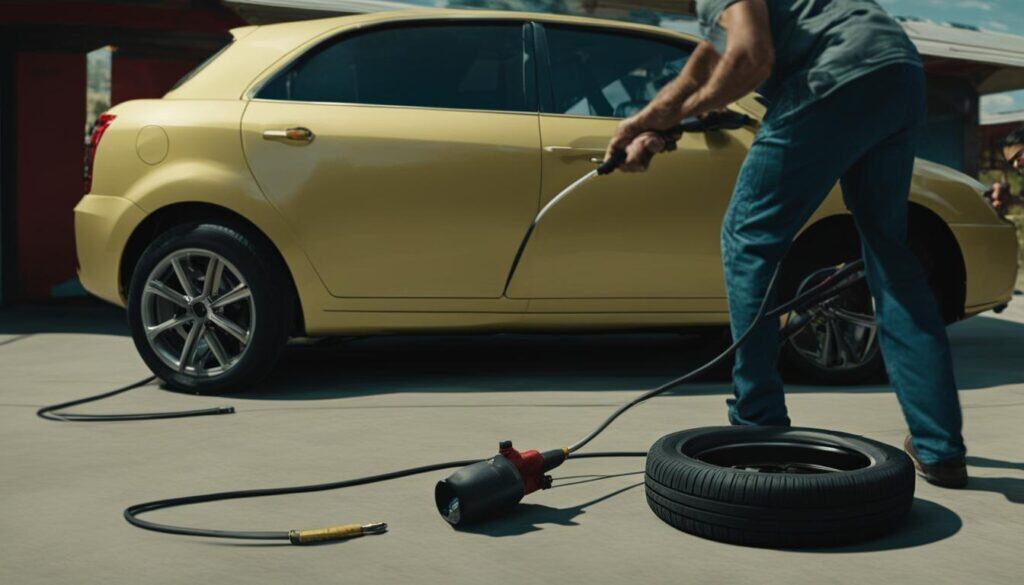
When using an air compressor to fill tires, it’s essential to prioritize safety. By following a few key considerations, you can ensure a safe and efficient tire inflation process. Here are some important tips to keep in mind:
1. Wear Protective Eyewear
Protective eyewear is crucial when using an air compressor to fill tires. It helps safeguard your eyes from potential debris that may be expelled during the inflation process. By wearing protective eyewear, you reduce the risk of eye injuries and ensure a safer tire inflation experience.
2. Stand Back and Avoid Leaning Over the Tire
When inflating a tire with an air compressor, it’s important to stand back and avoid leaning directly over the tire. This precautionary measure helps protect you from potential injury in case of overinflation or a tire blowout. By maintaining a safe distance, you minimize the risk of accidents and ensure your personal safety.
3. Follow Recommended Pressures and Monitor the Gauge
It’s crucial to follow the recommended tire pressures specified by the manufacturer. Refer to your vehicle’s owner’s manual or consult professional guidelines to determine the correct PSI for your tires. Additionally, monitor the pressure gauge throughout the inflation process to ensure that the tire reaches the desired pressure without overinflating or underinflating.
Always remember to never leave an inflating tire unattended. Even a slight oversight can lead to overinflation and potential tire damage. Exercise caution and be mindful of safety precautions to enjoy a smooth and secure tire inflation experience.

Can You Use an Air Compressor to Inflate Car Tires?
Yes, you can use an air compressor to inflate car tires. An air compressor is a versatile tool that can be used for various tire inflation needs, including car tires. It provides a quick and convenient way to fill your car tires at home without having to visit a gas station or tire shop.
Using an air compressor for car tire inflation is straightforward. You will need the necessary tools, such as a tire chuck, regulator, and pressure gauge, as mentioned earlier. These tools enable you to attach the air compressor to the tire valve stem, control the airflow, and monitor the pressure accurately.
When using an air compressor to inflate car tires, it is vital to refer to the vehicle manufacturer’s recommended tire pressure. This information can usually be found in the owner’s manual or on a sticker located inside the driver’s door jamb or the fuel door. Following these guidelines ensures optimal performance, handling, and safety for your vehicle.
| Benefits of Using an Air Compressor to Inflate Car Tires |
|---|
| Convenience: With an air compressor, you can fill your car tires at your convenience, saving time and effort. |
| Cost-saving: Regularly checking and maintaining proper tire pressure helps improve fuel efficiency, saving you money on gas in the long run. |
| Safety: Properly inflated car tires provide better traction, handling, and braking performance, enhancing overall road safety. |
| Longevity: Optimal tire pressure helps prevent premature tire wear, ensuring your tires last longer and perform better. |
Using an air compressor to inflate car tires offers a range of benefits, from convenience and cost-savings to improved safety and tire longevity. By having the right tools and following the manufacturer’s recommended tire pressure, you can easily maintain properly inflated car tires for a smooth and safe driving experience.
Why Proper Tire Pressure is Important for Safety
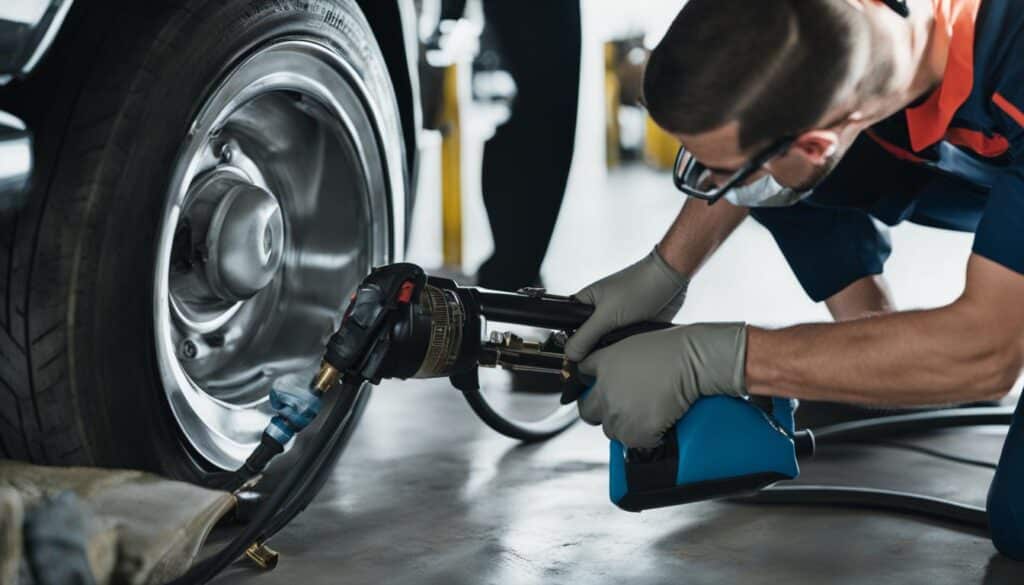
Proper tire pressure plays a critical role in ensuring your safety on the road. Maintaining the correct tire pressure is essential for optimal vehicle handling, braking distance, and fuel economy. Overinflated tires can lead to tire failures and blowouts, while underinflated tires can cause uneven wear, reduced traction, and an increased risk of accidents. By using an air compressor to pump up your tires, you can easily maintain the recommended pressure, contributing to safe and efficient vehicle operation.
When your tires are underinflated, they create more rolling resistance, which can result in decreased fuel efficiency. In fact, according to the U.S. Department of Energy, underinflated tires can reduce gas mileage by up to 0.3% for every 1 psi drop in pressure. By keeping your tires properly inflated, you can save money at the pump and minimize your vehicle’s impact on the environment.
An air compressor allows you to accurately fill your tires to the recommended pressure, ensuring consistent performance and optimal handling. Regularly checking and adjusting tire pressure is essential, especially before long trips or when carrying heavy loads. By investing in an air compressor and following proper tire inflation techniques, you can enjoy peace of mind knowing that you are taking an important step towards your safety on the road.
| Type of Tire | Recommended Pressure (PSI) |
|---|---|
| Car Tires | 32-35 PSI |
| Bike Tires | 30-50 PSI |
| Dirt Bike Tires | 12-15 PSI |
| Lawnmower Tires | 10-15 PSI |
| Tractor Tires | 18-20 PSI |
| Equipment Tires | varies based on application |
Remember, maintaining proper tire pressure is not only important for your safety but also for the longevity of your tires. Underinflated or overinflated tires can wear unevenly and require premature replacement, resulting in additional expenses. By using an air compressor to fill your tires and regularly checking the pressure, you can enjoy a smooth, safe, and cost-effective driving experience.
Benefits of Using an Air Compressor for Tire Inflation
- Convenience: With an air compressor at home, you can easily fill your tires whenever needed, saving you time and effort.
- Versatility: An air compressor can be used to inflate various types of tires, including car, bike, lawnmower, and tractor tires.
- Optimal Tire Performance: Properly inflated tires improve vehicle handling, fuel efficiency, and overall safety on the road.
Conclusion
Congratulations on learning how to use an air compressor to inflate your tires! With this valuable skill, you can now ensure that your tires are properly inflated, promoting safety and optimal performance on the road. Remember, having the right tools, such as a tire chuck, regulator, and pressure gauge, is essential for a successful tire inflation process.
By following the step-by-step instructions outlined in this guide, you can easily and conveniently fill your tires at home. Regularly checking your tire pressure and using an air compressor to fill them to the recommended PSI will contribute to better fuel efficiency, tire longevity, and overall road safety.
Thanks for taking the time to read this article and empowering yourself with the knowledge of using an air compressor for tire inflation. By incorporating these techniques into your routine maintenance, you’re making a proactive effort to ensure the safety and performance of your vehicle. So go ahead, confidently inflate your tires and enjoy a smooth and comfortable ride!
FAQ
What tools do I need to use an air compressor to fill tires?
You will need a tire chuck, regulator, and pressure gauge.
How do I know the correct PSI for my tires?
You can find the recommended PSI in the owner’s manual, vehicle stickers, or tire markings.
What precautions should I take when filling bike tires with an air compressor?
Use an adaptor for thinner bike tires, fill the tires slowly to prevent explosions, and be aware that thicker bike tires require less air pressure.
What are the benefits of using an air compressor for tire inflation?
Using an air compressor allows you to fill your tires at home, save time and convenience, and maintain proper tire pressure for better performance, fuel efficiency, and longevity.
How can I ensure safety when using an air compressor to fill tires?
Wear protective eyewear, stand back from the tire, follow recommended pressures, monitor the gauge, never leave an inflating tire unattended, and be cautious when releasing pressure from the tire.
Can I use an air compressor to inflate car tires?
Yes, an air compressor is a quick and convenient tool for inflating car tires. Refer to the vehicle manufacturer’s recommended tire pressure for optimal performance and safety.
Why is proper tire pressure important for safety?
Proper tire pressure ensures better handling, braking distance, and fuel economy. Underinflated or overinflated tires can lead to tire failures, blowouts, uneven wear, reduced traction, and increased risk of accidents.