
CCTV Installation Guide: Step-by-Step for Kenya Homes & Businesses
Installing a CCTV system is one of the most effective ways to protect your home or business in Nairobi and across Kenya. Whether you’re securing a residential plot in Kasarani, a shop in Westlands, or a warehouse along Mombasa Road, this guide walks you through the entire process — from planning camera positions to configuring remote viewing on your phone.
1. What You Need Before You Start
A successful CCTV installation starts with the right equipment. Buying cheap, undersized kits leads to blurry footage, frequent failures, and wasted money. Here’s what a complete system requires:
Core Equipment Checklist
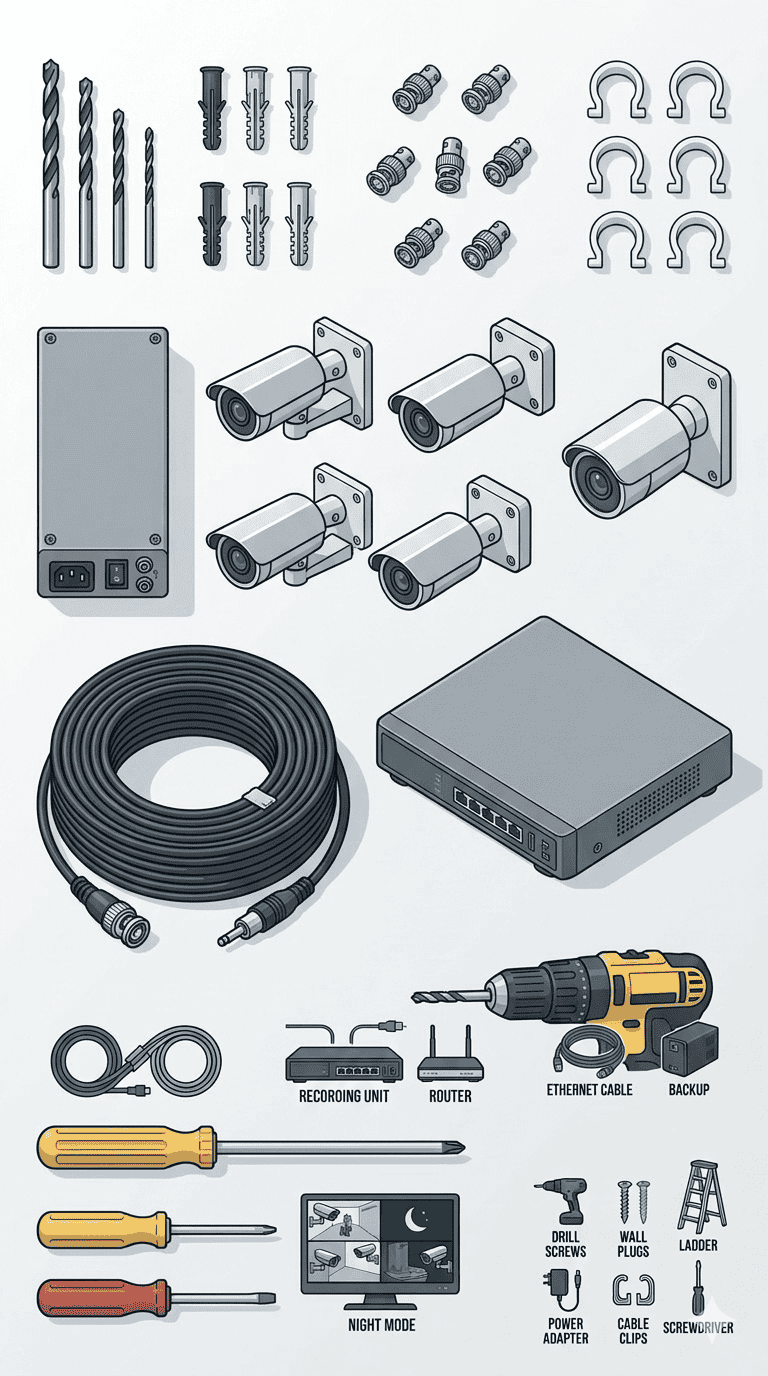
- CCTV Cameras — Choose between Analog (AHD/TVI) or IP cameras. For most Kenyan homes, 2MP–5MP AHD cameras offer the best balance of cost and image quality.
- DVR (Digital Video Recorder) for analog cameras, or NVR (Network Video Recorder) for IP cameras.
- Hard Drive (HDD) — 1TB handles approximately 15 days of continuous recording on 4 cameras at 1080p. 2TB is recommended for businesses.
- RG59 Siamese Cable (for analog) or Cat6 Cable (for IP cameras) — buy quality cable. Poor cable is the number-one cause of signal loss in Kenya’s hot climate.
- BNC Connectors & Crimping Tool (for analog), or RJ45 connectors (for IP).
- Power Supply Unit (PSU) — centralized 12V DC power distribution board is cleaner than individual adaptors.
- Monitor or TV — any HDMI/VGA display for initial configuration.
- Drill, wall anchors, and cable clips for mounting.
Pro tip from our AreaSpy installation team: Always buy cameras and the DVR/NVR from the same brand family (Hikvision, Dahua, or Uniview are our top recommendations in Kenya). Mixing brands causes compatibility issues especially with smart features like motion alerts and colour night vision.
2. How to Plan Camera Placement
Camera placement determines whether your system actually catches intruders — or just records empty walls. Most break-ins in Nairobi happen through gates, perimeter walls, back doors, and ground-floor windows. Plan your coverage around those entry points first.
Priority Coverage Zones
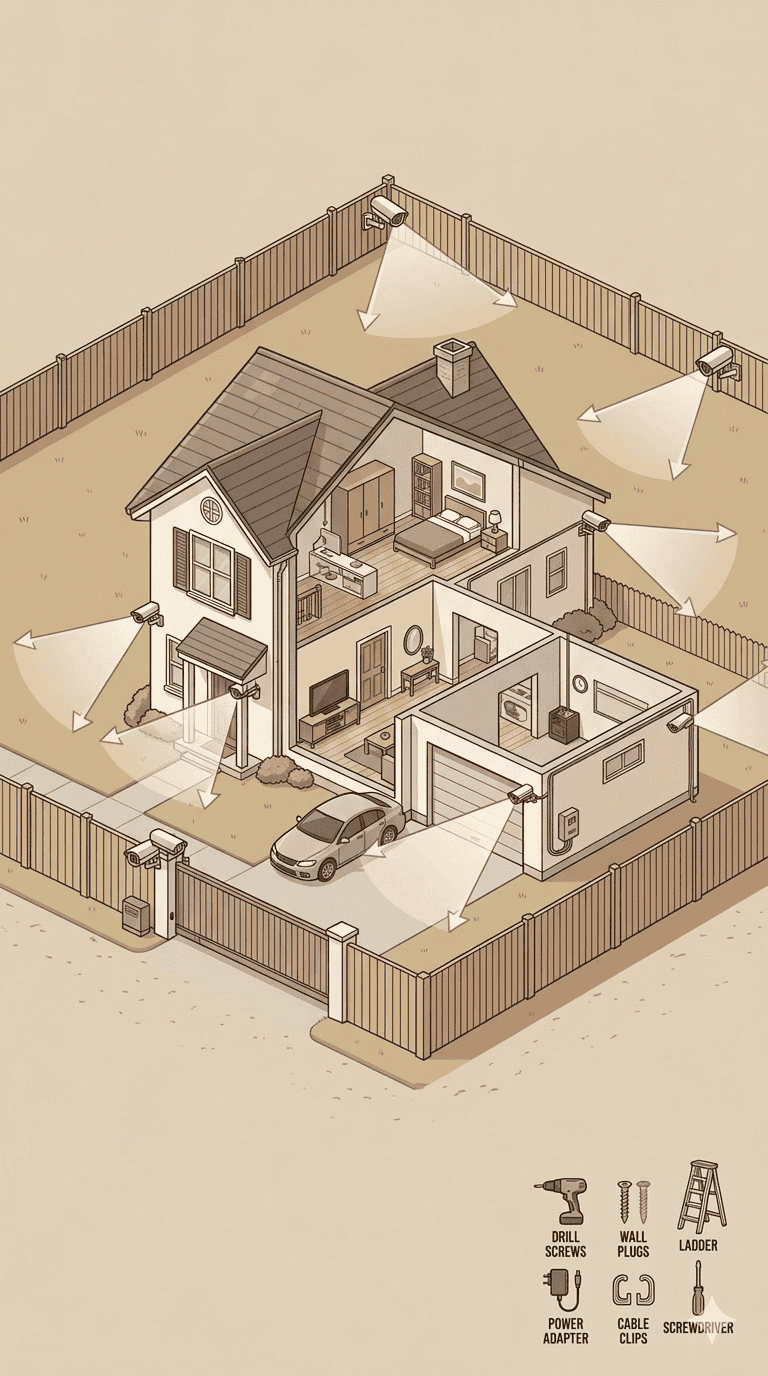
- Main gate and driveway entrance — use a wide-angle camera (2.8mm lens) positioned to capture faces and number plates.
- Front door and back door — a 3.6mm lens gives a focused corridor view.
- Perimeter corners — position cameras to cover two fence lines simultaneously by mounting at 90° corners.
- Parking area — a varifocal camera (2.7–13.5mm) lets you zoom in on vehicle registration plates.
- Interior (optional) — reception areas, server rooms, or cashier desks for businesses.
Mounting Height: The 2.5–3 Metre Rule
Mount cameras between 2.5 and 3 metres high. Too low and they’re easily tampered with or spray-painted. Too high (above 4m) and downward angle distorts facial recognition. Angle the camera slightly downward — approximately 15° to 20° — for the best field of view.
Avoid These Placement Errors
- Pointing cameras directly at bright light sources (sun, security lights) — causes lens flare and washed-out images.
- Placing cameras where rain will drip directly onto the lens — always install a small drip ledge above outdoor cameras.
- Overlooking blind spots at corners — walk your perimeter and physically look through each camera angle before drilling.
3. Cable Routing & Power Supply
Cable routing is where most amateur installations go wrong. Poor cable management leads to signal interference, weather damage, and difficult future maintenance.
Best Practices for Kenya Conditions
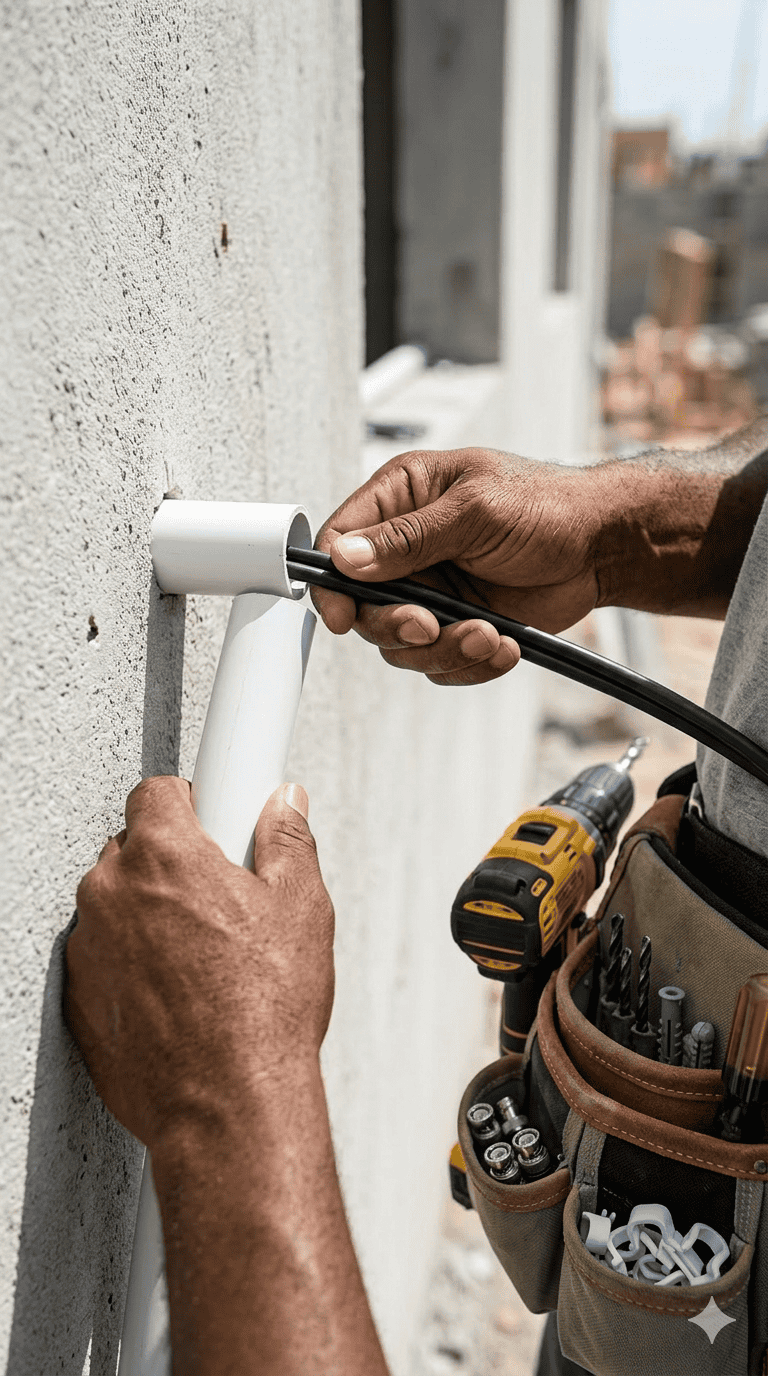
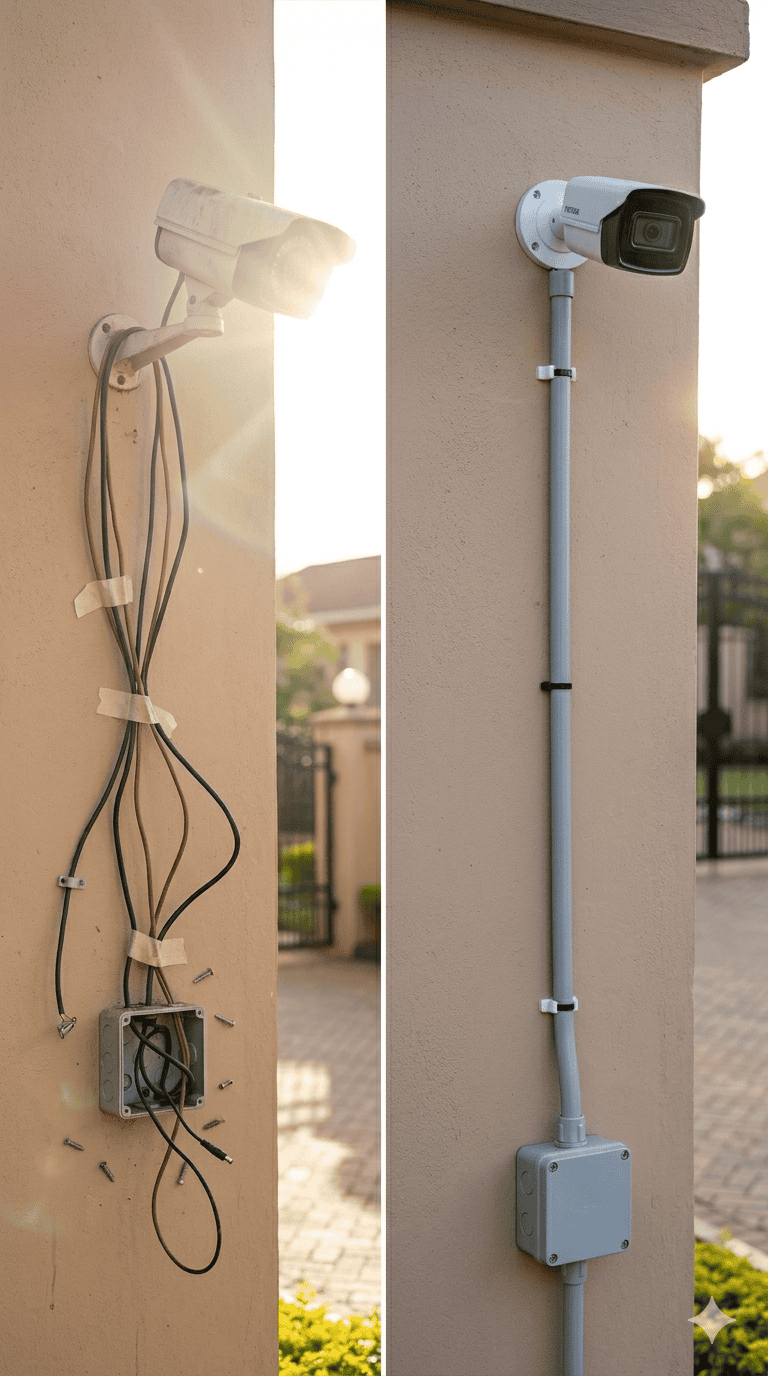
- Use conduit outdoors — Kenya’s UV radiation and occasional heavy rains degrade unprotected cables within 12–18 months. PVC conduit is inexpensive and significantly extends cable lifespan.
- Route cables through walls or ceiling spaces where possible — surface-mounted cables are vulnerable to tampering.
- Keep video cable away from power cables — run them at least 30cm apart to prevent electrical interference causing lines or noise on your footage.
- Label every cable at both ends — this saves enormous time during future troubleshooting.
- Leave a 30cm service loop at each camera point — allows adjustment without cutting and re-terminating cables.
Power Calculation
Standard AHD cameras draw approximately 300–500mA each at 12V DC. A 4-camera system needs at minimum a 3A power supply; an 8-camera system needs 5A–8A. Always size your PSU 30% above calculated load to account for surge current at startup.
4. DVR/NVR Setup & Configuration
Once cameras are mounted and cables are connected, configuring your recorder correctly ensures you actually capture usable footage when you need it.
Initial DVR/NVR Setup Steps
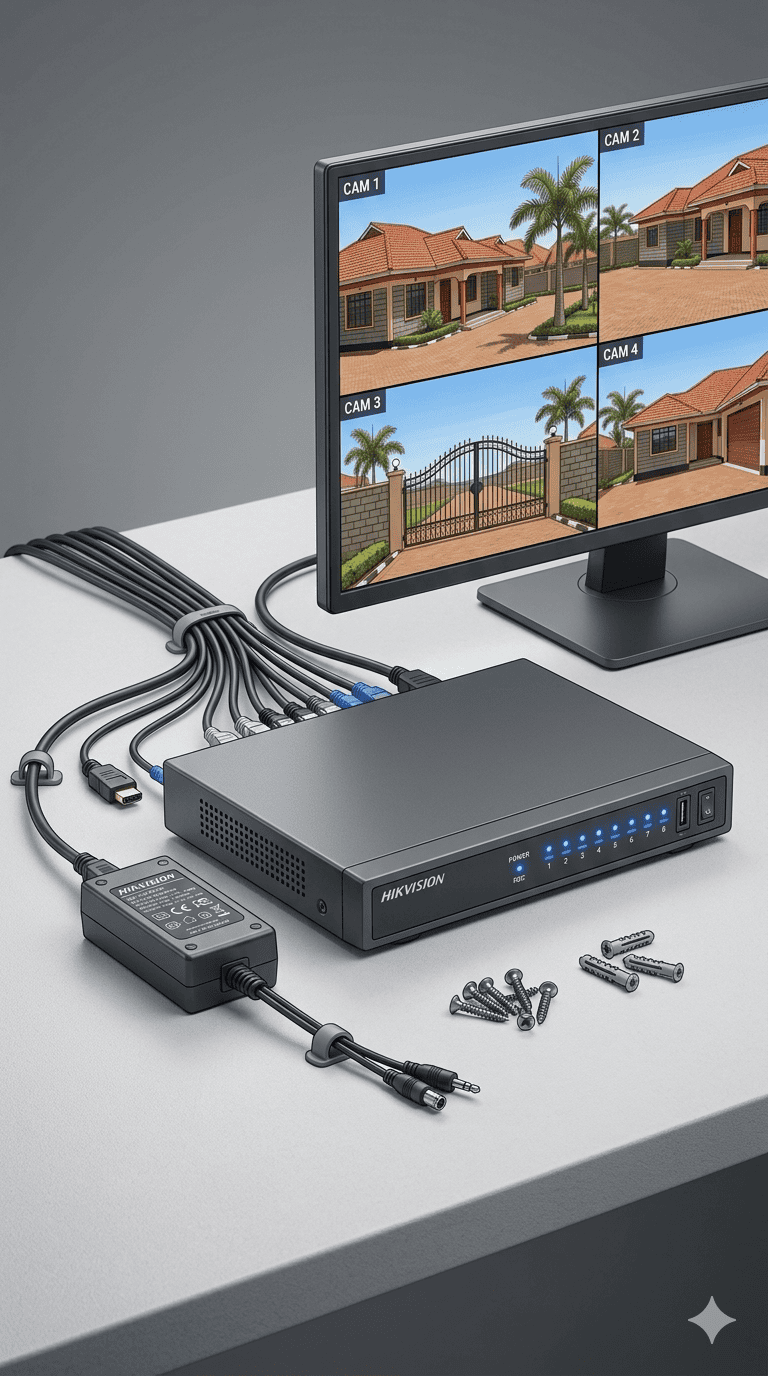
- Connect the DVR/NVR to your monitor via HDMI or VGA.
- Connect power and wait for the startup wizard — most modern Hikvision/Dahua units auto-detect connected cameras.
- Format the hard drive — new HDDs must be initialised through the DVR menu before recording begins.
- Set the correct date, time, and timezone (East Africa Time, UTC+3) — critical for footage to be legally useful.
- Configure recording mode: choose “Continuous + Motion Detection” for most Kenyan residential setups. This records at low frame rate continuously, but switches to full quality when motion is detected — balancing storage with coverage.
- Set the overwrite policy — enable “auto-overwrite oldest footage” so the system doesn’t fill up and stop recording.
- Change the default admin password immediately — a critical security step many people skip.
Recording Resolution Recommendations
- Entrances and high-priority zones: 1080p (2MP) at 15fps minimum.
- General overview cameras: 720p at 10–15fps is sufficient and saves storage.
- Avoid setting everything to maximum resolution — it fills your HDD in days and gains nothing for most applications.
5. Setting Up Remote Viewing on Your Phone
Remote viewing lets you monitor your property from anywhere via Safaricom, Airtel, or Wi-Fi. This is one of the most valued features for Kenyan homeowners managing properties or businesses remotely.
Steps to Enable Remote Access
- Connect the DVR/NVR to your router via Ethernet cable (Wi-Fi is unreliable for recorders — always use wired).
- In the DVR network settings, note the device serial number — modern systems use cloud P2P (Hik-Connect, DMSS, or iVMS-4500) and don’t require port forwarding.
- Download the manufacturer’s app: Hik-Connect (Hikvision), DMSS (Dahua), or XMEye (generic brands).
- Create an account, then add your device by scanning the QR code from the DVR menu or entering the serial number manually.
- Test live view on both Wi-Fi and mobile data (4G). If live view works on Wi-Fi only, check your router’s UPnP settings or contact your ISP about a static IP.

Data usage note: Live HD streaming uses approximately 1–3GB per hour. Enable sub-stream (low-resolution) view for remote monitoring on mobile data to reduce costs.
6. Common CCTV Installation Mistakes to Avoid
- Using indoor cameras outdoors — they fail within months. Always check the IP rating: IP66 minimum for outdoor use in Kenya.
- Skipping the HDD — some cheap kits ship without a hard drive. No HDD means no recording.
- Not testing night vision before final mounting — test infrared coverage at night before sealing cable entries.
- Weak or shared passwords — a common entry point for DVR hacking. Use a unique 12-character password.
- No surge protection — Kenya’s power supply has frequent surges. A UPS or surge protector at the DVR significantly extends equipment life.
7. DIY vs Professional CCTV Installation in Kenya
| Factor | DIY Installation | Professional Installation |
|---|---|---|
| Cost | Lower upfront | Higher, but includes warranty labour |
| Time | Full day to 2 days | 4–8 hours for a standard home |
| Cable quality | Variable | Professional-grade, conduit-protected |
| Camera positioning | Based on your own assessment | Experienced security survey included |
| After-sales support | Self-managed | Ongoing support & maintenance |
| Best for | Small apartments, technical users | Homes, businesses, multi-site properties |
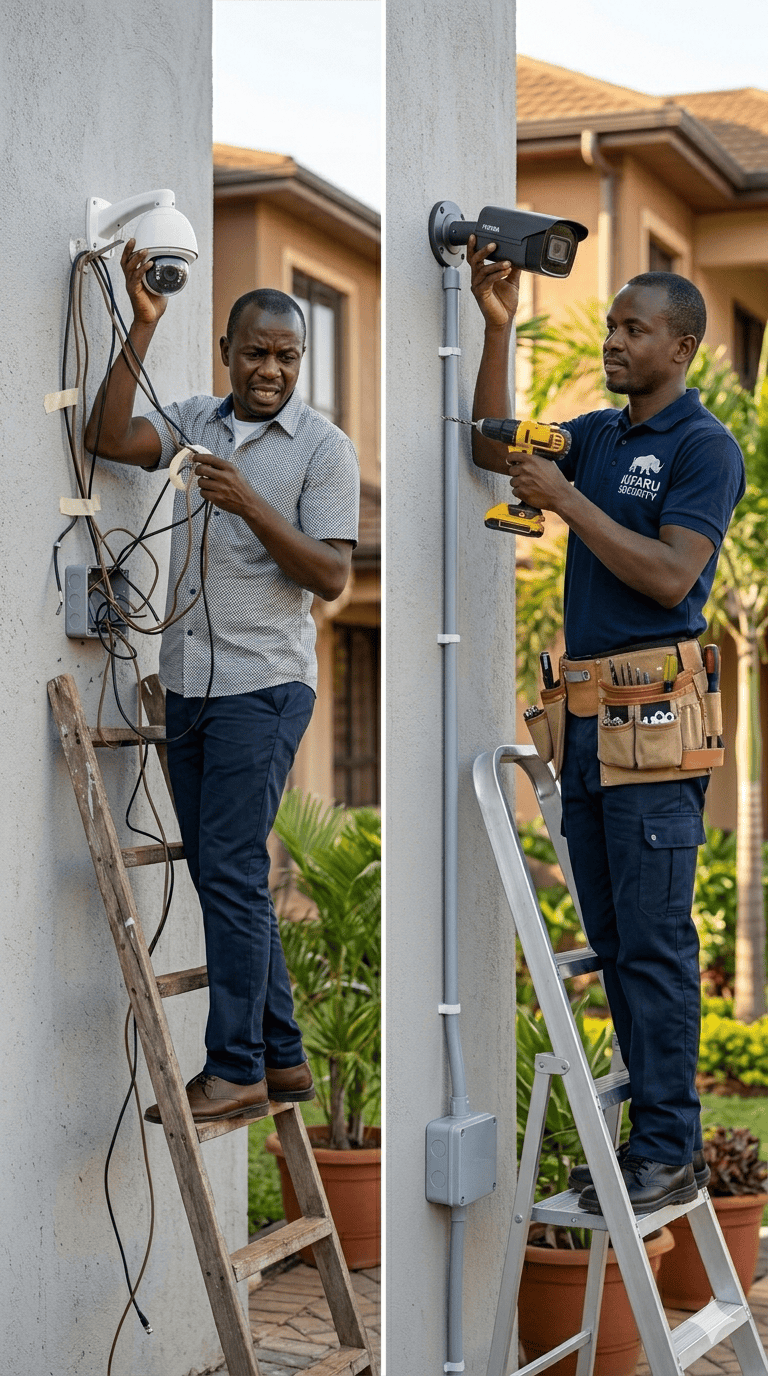
For most Nairobi homes and businesses, professional installation pays for itself through better camera placement, neater cabling, and avoiding costly re-dos. Contact our AreaSpy team for a free site assessment across Nairobi and its environs.
Frequently Asked Questions About CCTV Installation in Kenya
How much does CCTV installation cost in Nairobi?
A basic 4-camera analog CCTV system with professional installation in Nairobi typically costs between KES 25,000 and KES 45,000, depending on camera quality, cable distance, and mounting complexity. IP-based systems with higher resolution cameras range from KES 50,000 upwards. AreaSpy Security offers competitive packages with transparent pricing across Kasarani, Westlands, Karen, and all Nairobi areas.
How many cameras do I need for a 3-bedroom house in Kenya?
A standard 3-bedroom house in Nairobi typically needs 4 cameras: one covering the main gate, one at the front door, one at the back door or kitchen exit, and one covering the parking or compound perimeter. Larger plots or those with multiple access points may need 6–8 cameras.
Can I install CCTV myself without an electrician?
Yes, basic CCTV systems use low-voltage DC power and do not require a licensed electrician under Kenyan regulations. However, running cables through walls or ceilings neatly and safely is a skilled task. If you’re mounting cameras on boundary walls, drilling through concrete, or routing long cable runs, hiring a professional installer saves time and ensures a clean, weatherproof result.
What is the best CCTV brand in Kenya in 2025?
Hikvision and Dahua remain the top-recommended CCTV brands in Kenya in 2025 for their reliability, wide spare-parts availability, and strong software support. Uniview is a strong alternative. Avoid unbranded “white-label” cameras from unknown Chinese suppliers — firmware support is typically non-existent and cybersecurity vulnerabilities are common.
How long do CCTV cameras last in Kenya’s climate?
Quality outdoor CCTV cameras with IP66 weather protection last 5–8 years in Kenya’s climate when properly installed. The main causes of early failure are direct water ingress from poor mounting, UV damage to unprotected cables, and power surges. Installing a UPS and using conduit for all external cables significantly extends system lifespan.
Ready to Secure Your Property?
A properly installed CCTV system gives you real-time visibility, recorded evidence, and peace of mind — whether you’re at home, at work, or travelling. The difference between a system that works and one that fails when you need it most comes down to quality equipment, correct installation, and proper configuration.
AreaSpy Security installs professional CCTV systems across Nairobi — including Kasarani, Roysambu, Umoja, Donholm, Westlands, Karen, Kiambu Road, and Thika Road. We supply and install Hikvision, Dahua, and Uniview systems with full warranty support and free site assessments.